Why the Bad Bunny Super Bowl Backlash Is Bigger Than Music
The backlash against Bad Bunny performing at the Super Bowl isn't really about music. It's about Puerto Rico, anti-Blackness, and a century-old question: who gets to be American? Here's the history behind the outrage.
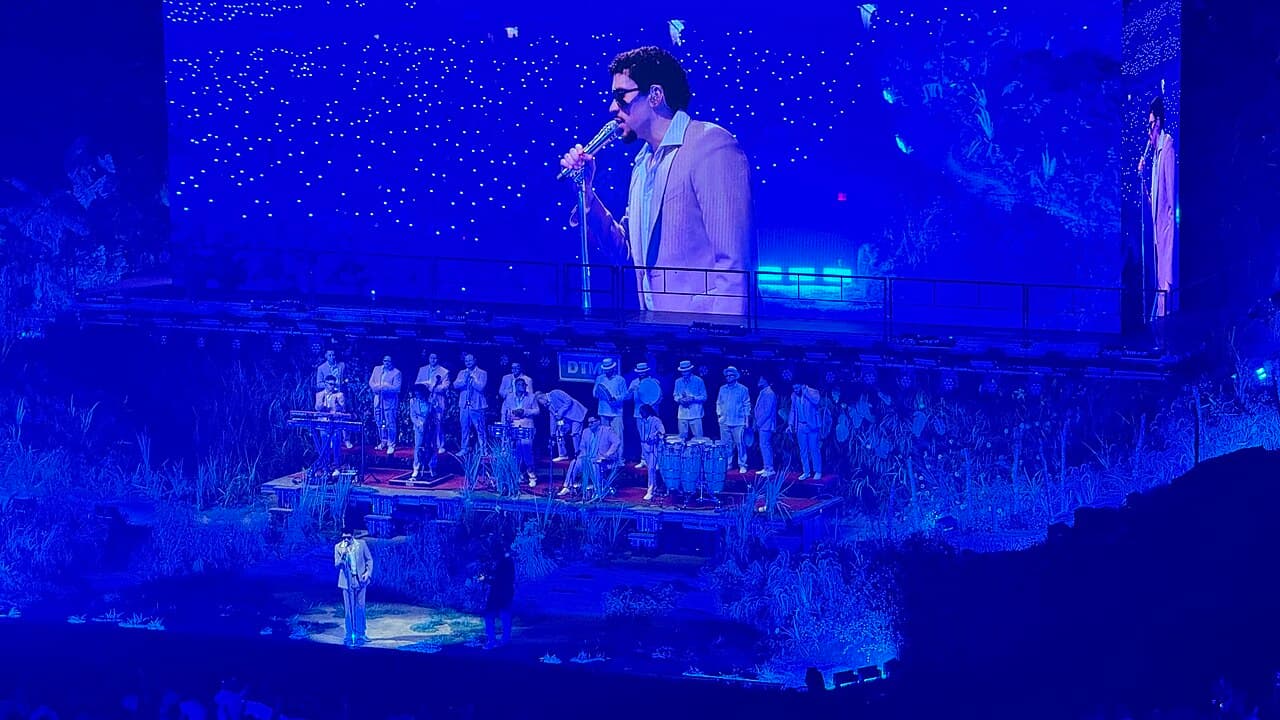
When Bad Bunny was announced as a Super Bowl headliner, the backlash was immediate. Too foreign. Too Spanish. Not American enough. But here's what most of the hot takes missed entirely: this controversy has almost nothing to do with Bad Bunny as an artist. It has everything to do with Puerto Rico, anti-Blackness, Latino identity, and a question America has been wrestling with for over a century — who gets to decide what is fully American?
Once you understand the history, the backlash makes complete sense. And that's exactly why you need to understand it.
Puerto Rico and America: A 127-Year Relationship Most Americans Don't Know About
Let's start with the facts that most Americans were never taught.
Puerto Rico has been a U.S. colony since 1898. Puerto Ricans were granted U.S. citizenship in 1917 — meaning they have been American citizens for over 100 years. Bad Bunny is not a foreign artist performing on American soil. He is an American citizen performing at an American event.
But that citizenship has always come with an asterisk. Puerto Ricans cannot vote for a U.S. president. They have no voting representation in Congress. Federal laws apply to them, but political power does not extend to them. Throughout its history as a U.S. territory, Puerto Rico has been used for military conscription, as a tax shelter, and as a site of economic extraction.
The result of this arrangement is a population that is legally American but treated as permanently foreign. So when a Puerto Rican artist headlines something as culturally central as the Super Bowl, it forces a question that makes a lot of people deeply uncomfortable: if Puerto Ricans are American citizens, why does their visibility feel like an invasion to so many people?
The Language Question: Why Bad Bunny Singing in Spanish Threatens Some People
Bad Bunny performs almost exclusively in Spanish. For people with white nationalist leanings, that reads as invasive, un-American, and political rather than cultural.
The argument essentially goes: if you're performing on a national American stage, why aren't you speaking English?
This argument ignores that Spanish is Bad Bunny's cultural language. It ignores that Puerto Rico is a U.S. territory. And it ignores the fact that Spanish-speaking communities have existed on this continent far longer than the United States has.
But more importantly, this argument reveals something about what the backlash is actually about. It isn't about language. It's about assimilation. Black and brown performers are tolerated on national stages when they code-switch, when they soften their cultural expression, when they make white mainstream audiences comfortable. Bad Bunny does none of that. He performs in Spanish without apology. He doesn't adjust his style to appeal to audiences who weren't his original base. And he has been vocal about U.S. policies that have harmed Puerto Rico.
That combination — cultural authenticity, linguistic pride, and political awareness — is exactly what makes certain audiences furious.
Why Black Men Are Celebrating Klay Thompson After The Meg Thee Stallion Breakup And What It Reveals
Anti-Blackness, Afro-Latino Identity, and Why This Feels Familiar
Here's a layer of this story that gets left out of most conversations: Puerto Rico has a deep and rich African history. A significant portion of Puerto Rican culture — including the musical traditions that shaped Bad Bunny — is rooted in Afro-Caribbean identity.
Afro-Latino identity receives the same cultural hostility that Black identity receives in America. The backlash against Bad Bunny is not only about language or national origin. It is steeped in anti-Blackness — the same anti-Blackness that has historically targeted Black artists, Black cultural expression, and Black visibility on mainstream American stages.
This is why, from a Black American perspective, none of this feels new. Black Americans have watched jazz get called immoral, rock and roll get called dangerous, and hip hop get called un-American. The pattern is the same every single time. A marginalized group produces culture. That culture reaches a national stage. Backlash erupts claiming the culture is un-American or threatening. And then, over time, it becomes normalized — often after the original community has been written out of their own contribution.
Bad Bunny is living inside that exact cycle right now.
The Super Bowl as a Cultural Gatekeeper
The Super Bowl is not just a football game. It is one of the most watched television events in American history — a stage where the country performs its own identity back to itself. Military flyovers. Patriotic anthems. Corporate America. Everything carefully curated to reflect a specific image of what America is.
That image has historically been white.
When Beyoncé brought Black Panther imagery to the Super Bowl halftime show, the backlash was intense. When hip hop artists took that stage, critics questioned whether rap music belonged at such an "American" institution. Now Bad Bunny performs in Spanish and the same voices say the same things.
The through line is not the genre or the language. The through line is non-white visibility on a platform that has functioned as a gatekeeper of American identity. The outrage is about who that stage is being shared with — and who feels that sharing threatens something they believe belongs to them.
The Pattern You Need to Recognize
Once you see this pattern, you cannot unsee it. It repeats throughout American cultural history with remarkable consistency:
Step one: A marginalized group gains visibility. Step two: Their culture appears on a national stage. **Step three:**Backlash erupts — claims of it being un-American, foreign, threatening. Step four: Over time, it becomes normalized, often after being co-opted by mainstream white culture.
Chuck Berry and early rock and roll. Hip hop in the 1980s. Beyoncé at the Super Bowl. Bad Bunny in 2025. Different artists, different eras, same machinery.
Recognizing the pattern is the first step toward refusing to let it work.
The Bottom Line: Bad Bunny Is American. Spanish Belongs Here. This Fight Is Old.
Puerto Ricans are American citizens. Spanish is an American language. Afro-Latino culture is part of the American story. Bad Bunny performing at the Super Bowl is not an anomaly or an intrusion — it is an accurate reflection of what this country actually is, as opposed to what some people wish it still was.
The people who are angry aren't reacting to a performer. They're reacting to the loss of a monopoly — the monopoly on who gets to define American culture, who gets to take up space on the biggest stages, and whose humanity gets treated as fully, unambiguously American.
That monopoly has always been a myth. And every time an artist like Bad Bunny steps into the spotlight and refuses to shrink, that myth gets harder to maintain.
Keep Up With the Culture — Join the Yasmin Breakdown on Patreon
This is the kind of analysis you won't get from a sports highlight reel or a three-minute news segment. Yasmin Breakdown exists to give you the history, the sociology, and the power dynamics behind the stories dominating the cultural conversation.
If this kind of depth matters to you, support independent analysis directly. Join the Yasmin Breakdown community on Patreon for extended breakdowns, deeper dives, and conversations that go beyond the headlines.
Watch the original video on YouTube and share this article with someone who's still asking why people are so upset about a singer.